



07 Jan 2026: EFFICIENCY, REGULATIONS AND PROFITABILITY
The start of a new fiscal year is the critical moment to review the OPEX (Operating Expenses) of any production plant. In the food, logistics, and chemical processing sectors, the energy costs associated with industrial cooling are often among the highest.
At Bernad®, we have observed that 2026 will not be a year of transition, but one of technological consolidation. Companies that continue to operate with a corrective mindset (“fix it when it breaks”) will see their costs skyrocket compared to those adopting data-driven engineering.
Below, we break down the three technical pillars that will define the competitiveness of your refrigeration installation this year.
1. F-Gas Regulations and the End of Stopgap Solutions
Legislative pressure on fluorinated gases with high GWP (Global Warming Potential) continues to increase. This has a direct consequence on your bottom line: the price of synthetic refrigerants and their associated taxes will continue to rise, while availability decreases.
Why Migrate to Natural Refrigerants?
In 2026, maintaining obsolete equipment with gases like R-404A or similar is financially unsustainable. The clear trend is refrigeration using Ammonia (NH3) and CO2.
Regulatory Security: These are definitive solutions that will not be affected by future F-Gas restrictions.
Superior Thermodynamics: Ammonia remains unbeatable in large-scale applications due to its heat transfer capacity.
2. COP as a Financial Indicator, Not Just Technical
Historically, maintenance focused on keeping the machine “running.” Today, the goal is to ensure the machine “doesn’t waste.” The COP (Coefficient of Performance) is the metric that relates the cooling power obtained to the electrical power consumed.
A maladjusted system (dirty condensers, presence of non-condensables, or poorly calibrated expansion valves) may be running without stoppages but consuming 20% more electricity than necessary.
Actions to Improve COP This Year:
Implementation of VSDs (Variable Speed Drives) on compressors and fans.
Floating Head Pressure systems to take advantage of lower ambient temperatures (especially in winter and spring).
Periodic energy audits to detect consumption deviations.
3. From Preventive to Predictive Maintenance 4.0
IoT (Internet of Things) technology has transformed plant room management. It is no longer enough to change the oil every X hours (preventive); now we can know exactly when a bearing is going to fail before it happens (predictive).
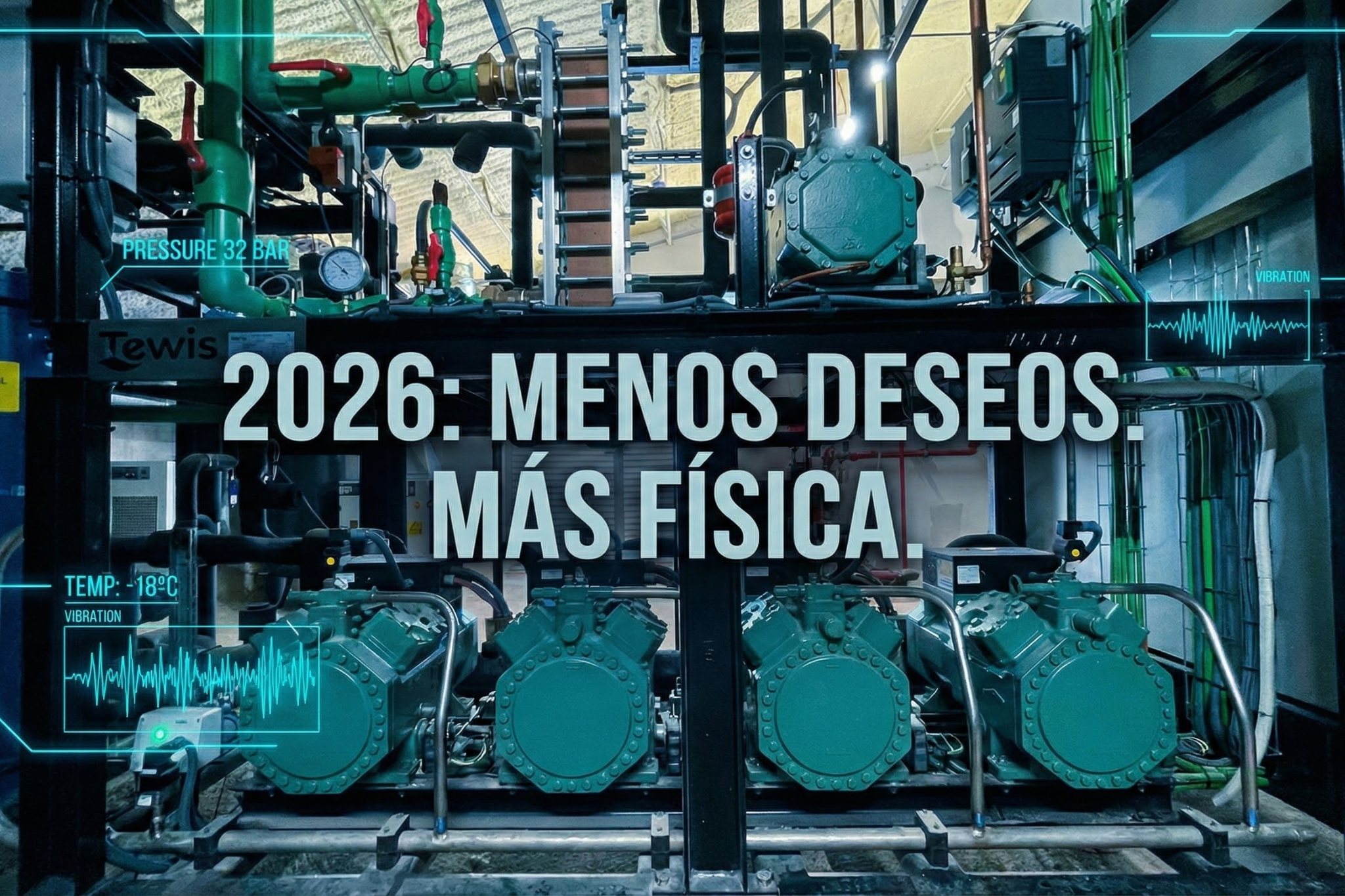
Through vibration analysis, thermography, and real-time pressure monitoring, at José Bernad, S.L., we help plants shift from a reactive model to a proactive one.
Advantages of the Predictive Approach:
Elimination of Unplanned Downtime: Avoids loss of profit during peak production times.
Extended Lifespan: Equipment suffers less mechanical stress.
Real Planning: Interventions are carried out when production allows, not when the machine collapses.
Conclusion: Engineering for Profitability
2026 demands a strategic vision of industrial refrigeration. It is not just about producing cold, but doing so at the lowest possible cost and with maximum operational safety.
Do you need to evaluate the current state of your installation or plan a migration to natural refrigerants? Contact the engineering team at Bernad®, and let’s design an efficient year together.