


Home › Types of refrigeration › Glycol
Secondary fluid · Food-grade glycol
Industrial refrigeration with glycol
Glycol water as a secondary fluid to keep the refrigerant charge to a minimum, with minimal temperature fluctuations.
Food-grade glycol
USP monopropylene glycol, compatible with the agri-food industry.
Lower leak risk
Harmless to the environment.
Minimum refrigerant charge
For both fluorinated and natural refrigerants.
Stable temperature
Works with minimal temperature fluctuations.
How glycol refrigeration works
It meets the most demanding environmental and energy-saving requirements.
What glycol is
An antifreeze for water; industrial refrigeration uses USP monopropylene glycol, or food-grade glycol.
Indirect system
The heat exchanger transfers the cold to a glycol water circuit.
Pumped to the room
A circulation pump sends the glycol water to the room air coolers.
Minimum charge
Minimum charge of fluorinated (R-404A, R-134a, R-410A…), natural (R717, CO₂…) or HFO refrigerants.
Energy savings
It reinforces our commitment to energy-saving systems.
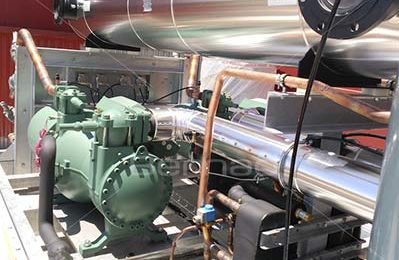
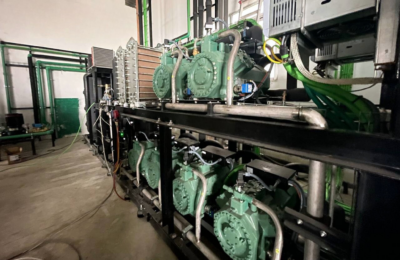
Glycol projects
Installations where we have used glycol (project details mostly in Spanish).
Frequently asked questions
Which glycol is used in industrial refrigeration?
USP monopropylene glycol, known as food-grade glycol: clear, slightly thick, harmless to the environment and compatible with the agri-food industry.
How does it work?
It is an indirect system: the heat exchanger transfers the cold to glycol water, which a circulation pump sends to the room air coolers.
What are its advantages?
A minimum refrigerant charge, environmental friendliness, lower leak risk and minimal temperature fluctuations.
Which refrigerants is it combined with?
With fluorinated refrigerants, natural ones such as ammonia or CO₂, or HFO types.
Want a glycol installation?
We advise you with no obligation.
Associations we collaborate with